Heavy mineral processing equipment places demands on foundations that are fundamentally different from those of ordinary buildings. Crushers, mills, screens, separators, conveyors, and other processing machinery can impose substantial static loads while generating continuous vibration and dynamic forces during operation. In Peruvian mining environments, foundation construction may also contend with steep terrain, remote sites, variable ground conditions, and restricted access. Consequently, concrete production and placement equipment becomes an integral part of foundation execution rather than a secondary consideration.
The choice between a self loading concrete mixer in Peru, a concrete batching plant, a concrete mixer pump machine, or a dedicated concrete pump in Peru depends on foundation scale, site accessibility, required concrete volume, and placement distance. The objective is not simply to produce concrete, but to maintain a dependable flow of correctly mixed material from batching to final placement while preserving consistency across massive equipment foundations.
Concrete Foundation Requirements for Heavy Mineral Processing Equipment
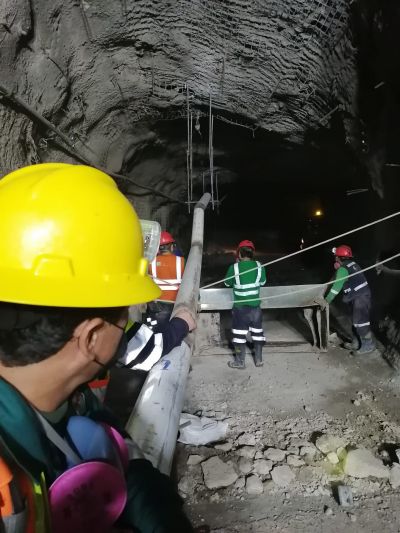
Mining foundations are designed around the mechanical behavior of the equipment they support. A foundation for a mineral crusher, for example, must resist repeated impact and vibration, while a foundation supporting a grinding mill may require substantial mass and dimensional stability. The concrete must therefore be placed as a coherent structural body, with adequate reinforcement, embedments, anchor systems, and finishing tolerances.
Managing Heavy Loads and Mechanical Vibration
Processing machinery transfers forces into its supporting structure throughout its operating cycle. Static weight is only one component. Rotating assemblies, crushing forces, material impacts, and equipment start-stop cycles can generate fluctuating loads that gradually expose weaknesses in poorly constructed foundations.
For this reason, foundation construction normally involves carefully prepared excavation, compacted subgrade, reinforcement installation, formwork, embedded components, and accurately positioned anchor bolts before concrete placement begins. The concrete supply system must then deliver sufficient material within the planned placement sequence to reduce cold joints and discontinuities.
Preparing Concrete for Large Foundation Pours
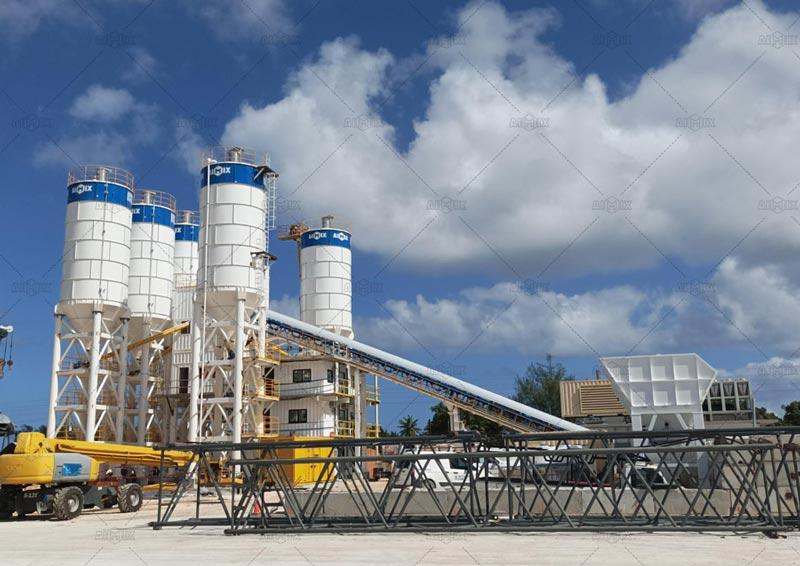
Large mineral processing foundations can require considerable quantities of concrete. A conventional small mixer may become inefficient when the pour must continue for several hours. In such cases, a concrete batching plant for sale can centralize aggregate storage, weighing, cement dosing, water addition, and mixing.
This arrangement creates a more systematic production cycle. Instead of relying on isolated batches, the plant can supply a sustained volume of concrete with controlled proportions. For foundations where concrete volume, consistency, and scheduling are critical, centralized batching can provide a more predictable production rhythm.
Concrete Equipment Used for Mine Foundation Construction
Peruvian mine sites vary enormously in scale and accessibility. A large processing complex may justify a stationary batching plant, while a remote foundation may benefit from mobile equipment that can travel directly to the working area. Selecting equipment according to actual site conditions prevents both under-capacity and unnecessary investment.
Self Loading Concrete Mixer in Peru for Remote Foundation Work
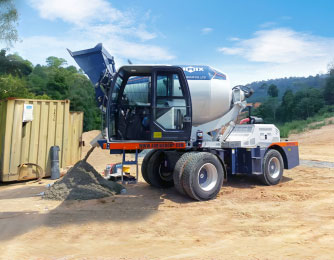
A self loading concrete mixer in Peru combines several functions in a single mobile unit. It can load aggregates, weigh or proportion materials, mix concrete, and transport the fresh mixture to the placement location. This configuration is particularly useful when foundation work takes place away from established concrete production infrastructure.
For remote mineral processing projects, mobility can be more valuable than maximum theoretical output. The mixer can move around the construction area and produce concrete closer to the foundation. This reduces dependence on external concrete delivery and can simplify operations where haulage routes are rough, elongated, or geographically constrained.
Concrete Batching Plant for High-Volume Foundations
When a mine is constructing multiple equipment foundations, retaining structures, slabs, and supporting facilities, a concrete batching plant becomes more advantageous. The plant establishes a dedicated concrete production point capable of supplying repeated batches according to a predetermined mix design.
The principal benefit is production continuity. Aggregates and cement can be organized around a fixed production workflow, while automated weighing and control systems help maintain mixture proportions. For large mineral processing installations, this approach can support foundation construction over an extended project schedule rather than serving only one isolated pour.
Concrete Mixer Pump Machine for Integrated Mixing and Placement
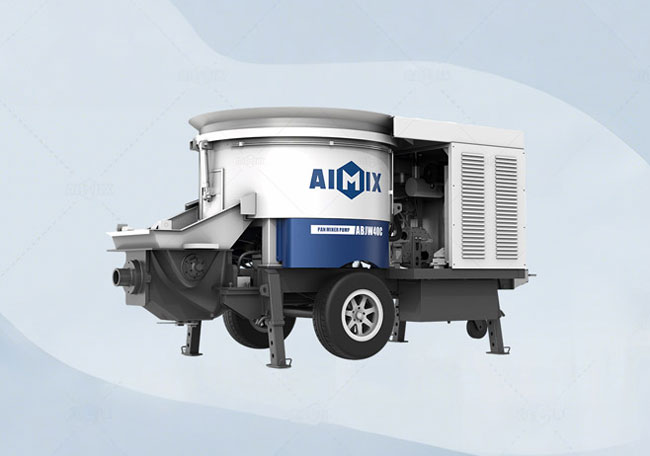
A concrete mixer pump machine is useful when mixing and pumping need to occur within a compact equipment arrangement. It combines concrete preparation with pumping, reducing the number of separate machines required for certain foundation applications.
This can be advantageous around equipment bases, narrow construction zones, and foundations where concrete must be delivered through pipelines rather than by direct vehicle discharge. The machine can mix the required material and subsequently pump it toward the formwork, creating a more streamlined connection between production and placement.
Concrete Pump in Peru for Difficult Placement Conditions
A dedicated concrete pump in Peru becomes particularly valuable when the foundation is deep, elevated, obstructed, or located beyond the practical discharge radius of a mixer truck. Pumping allows fresh concrete to travel through a pipeline to the required point, reducing manual handling and improving placement reach.
This capability matters in mining construction because processing equipment is not always installed on level ground. Foundations may be separated by structural platforms, excavation zones, access roads, or other permanent infrastructure. Pumping can bridge these spatial constraints while maintaining a controlled placement sequence.
Matching Concrete Equipment to Different Mining Foundation Tasks
Small or Scattered Foundation Projects
For smaller foundations distributed across a mining site, a self loading mixer in Peru can offer operational flexibility. Instead of establishing a large stationary production system, concrete can be produced near the individual work area. This is especially practical during preliminary construction, equipment relocation, or isolated structural works.
Large Mineral Processing Facilities
For a centralized processing plant containing numerous crushers, mills, screens, conveyors, and auxiliary structures, a batching plant is generally better suited to sustained concrete demand. The production system can be positioned strategically so that multiple construction zones receive concrete according to the project schedule.
When placement distances become substantial, the batching system can work alongside concrete pumps. The batching plant handles high-volume production, while the pump addresses the final delivery challenge. This division of responsibilities creates a more scalable concrete supply chain.
High-Elevation and Difficult-Access Sites
Peru’s mountainous mining regions can introduce steep gradients and restricted construction corridors. In these environments, equipment mobility and pumping reach become decisive factors. A self-loading mixer can support localized production, while a concrete pump can transfer fresh concrete across elevation changes or around physical obstructions.
The most effective configuration is therefore determined by the terrain as much as by concrete volume. A technically powerful machine may still be inefficient if it cannot maneuver within the available workspace.
Concrete Placement, Curing, and Foundation Quality Control
Producing concrete is only one stage of foundation construction. Once the material reaches the foundation, placement must be coordinated with reinforcement, embedded components, vibration, leveling, and finishing. Large foundations should be poured according to a carefully planned sequence so that each section bonds properly with adjacent concrete.
Maintaining Continuous Concrete Supply
Interrupted delivery can complicate large foundation pours. The batching plant, self-loading mixer, concrete mixer pump, or concrete pump should therefore be selected according to the required placement rate rather than isolated machine capacity alone. Equipment downtime, travel distance, loading cycles, and pumping conditions all influence the effective output.
Compaction, Finishing, and Curing
After placement, concrete must be properly compacted to reduce entrapped air and ensure contact around reinforcement and embedded components. Surface finishing then establishes the required elevation and geometry.
Curing is equally important. Heavy equipment foundations need sufficient strength and dimensional stability before machinery is installed and commissioned. Appropriate curing conditions help reduce premature moisture loss and support the development of the designed concrete properties.
For Peruvian mines, foundation construction is therefore an equipment-matching exercise as much as a concrete engineering task. A self-loading mixer can provide mobility for remote work, a batching plant can sustain high-volume production, and a concrete mixer pump machine or concrete pump can solve demanding placement conditions. When these machines are matched to foundation scale, terrain, production requirements, and installation sequence, concrete work becomes more predictable—and the resulting foundations provide a more dependable platform for heavy mineral processing equipment.