An RTG crane’s structural design directly affects its purchase price, operating efficiency, maintenance requirements, and total cost of ownership. The main cost drivers include the gantry frame configuration, girder dimensions, leg arrangement, material selection, load distribution, wheel loads, fatigue resistance, and wind-load capacity. A structure designed for higher loads, longer spans, or more demanding operating conditions generally requires more material and stronger connections, increasing initial manufacturing costs. However, an undersized or poorly optimized structure can lead to excessive deformation, fatigue damage, frequent maintenance, and operational downtime. For industrial buyers and terminal operators, evaluating RTG crane structural design means balancing structural strength, operational requirements, service life, and lifecycle costs rather than simply choosing the lowest-priced equipment.
1. What Is RTG Crane Structural Design?
RTG crane structural design refers to the engineering process of determining the configuration, dimensions, materials, connections, and load-bearing capacity of a Rubber Tyred Gantry Crane.
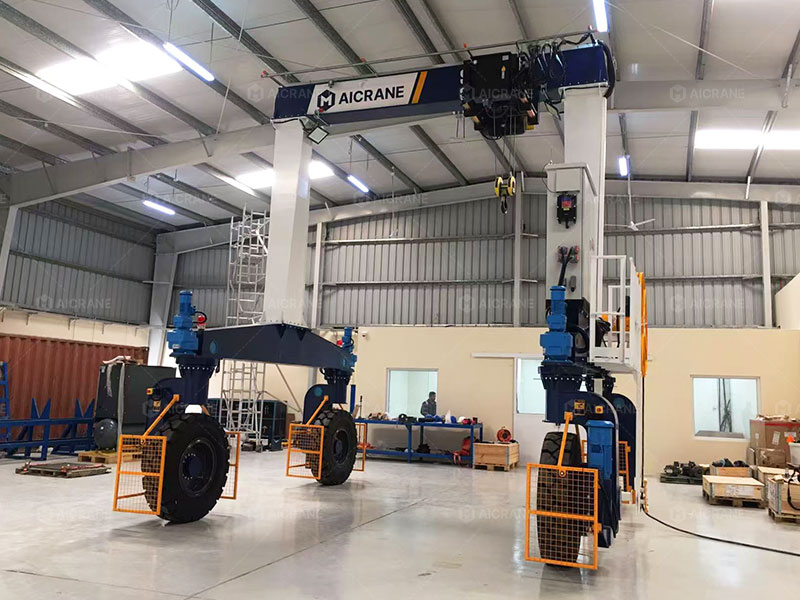
An RTG crane typically consists of several major structural components:
- Main girder: The primary horizontal load-bearing structure that supports the trolley and lifting mechanism.
- Gantry legs: Vertical structural members connecting the main girder to the lower supporting structure.
- Cross beams and end beams: Components that connect the legs and distribute loads throughout the gantry frame.
- Trolley supporting structure: The structural arrangement that supports trolley movement and transfers lifting loads to the main girder.
- Wheel and bogie supporting structures: Components that transfer crane loads to the ground through rubber tires.
- Bracing systems: Structural members that improve overall rigidity and resist lateral forces and deformation.
These components work together to support container lifting, trolley movement, and crane travel.
Unlike rail mounted cranes, RTG cranes use rubber tires and can move between designated container handling areas. Their structural design must therefore consider not only vertical lifting loads but also travel conditions, steering forces, uneven ground, wind exposure, and repeated operating cycles.
The relationship between structural design and cost is direct: every structural decision influences material consumption, manufacturing complexity, transportation requirements, installation, and long-term maintenance.
2. How Does the Main Girder Design Affect RTG Crane Cost?
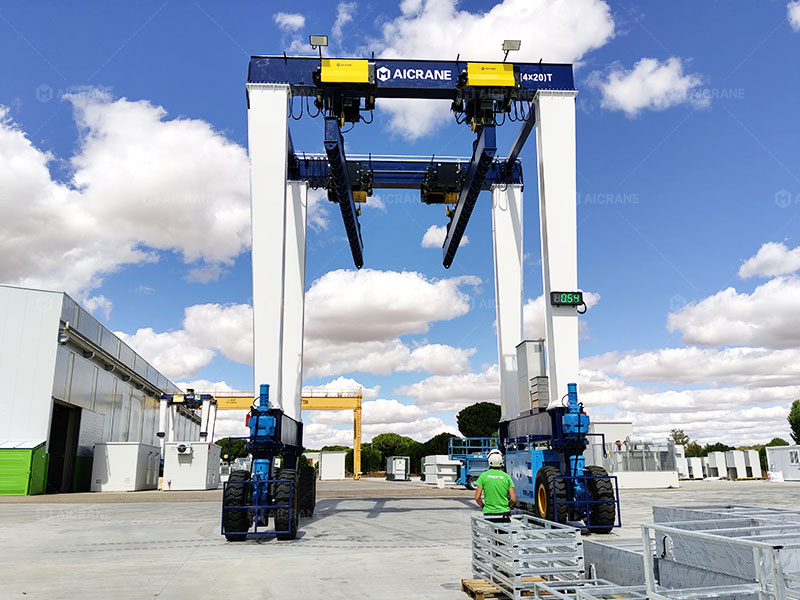
The main girder is one of the most important structural components of an RTG crane because it carries the trolley and transfers lifting loads to the gantry legs.
Its design has a significant influence on the total steel weight, fabrication cost, structural stiffness, and long-term performance.
2.1 Girder Dimensions and Steel Consumption
The main girder must have sufficient strength and stiffness to withstand the loads generated during lifting and trolley movement.
Its dimensions depend on several factors:
- Rated lifting capacity and lifting configuration
- Crane span and structural geometry
- Trolley weight and travel position
- Dynamic effects during lifting and braking
- Applicable structural design standards
- Fatigue requirements and expected operating cycles
A crane with a longer span generally requires additional structural strength and stiffness to control deflection. Depending on the configuration, this may require larger girder sections, additional reinforcement, or a different structural arrangement.
For example, two RTG movable gantry cranes with the same rated lifting capacity may have different manufacturing costs if their spans, trolley configurations, or operating requirements differ.
A wider-span design should not automatically use the same girder dimensions as a narrower-span model.
2.2 Girder Deflection and Structural Rigidity
Girder deflection is another important consideration.
When a container is lifted, the main girder experiences bending. Excessive deformation can affect trolley alignment, operating stability, and the positioning accuracy of the lifting system.
Increasing girder stiffness may require additional steel or structural reinforcement, raising manufacturing costs. However, insufficient stiffness can create operational problems and increase the likelihood of structural fatigue or alignment-related maintenance.
The objective is not to make the girder as heavy as possible. It is to achieve the required strength, stiffness, and fatigue performance with an optimized amount of material.
2.3 Single-Girder and Double-Girder Configurations
The appropriate girder arrangement depends on the RTG crane’s lifting capacity, trolley configuration, span, and operating requirements.
Different structural configurations influence:
- Overall steel consumption
- Trolley support and travel arrangement
- Fabrication and assembly complexity
- Maintenance accessibility
- Transportation dimensions
Buyers should evaluate the complete structural configuration rather than comparing girder types in isolation. A structural arrangement that appears less expensive initially may require additional reinforcement or modifications to satisfy the actual operating conditions.
3. Why Does Gantry Leg Design Influence Manufacturing and Operating Costs?
The gantry legs support the main girder and transfer loads to the wheel assemblies. Their design determines how effectively the crane distributes vertical and horizontal forces throughout its structure.
3.1 Leg Configuration and Load Distribution
RTG cranes commonly use different leg arrangements depending on the crane’s design and operational requirements.
The leg structure must withstand:
- Vertical loads from the main girder and lifting system
- Horizontal forces generated by trolley movement
- Wind forces acting on the crane
- Forces generated during crane travel and steering
- Dynamic loads caused by acceleration and braking
Poor load distribution can create localized stress concentrations in the legs, connections, and supporting beams.
A well-engineered leg configuration distributes these forces effectively, reducing unnecessary reinforcement and improving structural reliability.
3.2 Structural Weight and Steel Cost
The dimensions and thickness of the gantry legs directly affect the total steel weight.
Using thicker plates or larger structural sections may increase strength, but excessive material does not necessarily produce a better economic result.
Engineers must consider the actual stress distribution, buckling resistance, connection strength, and fatigue requirements when determining leg dimensions.
For buyers, the important consideration is whether the manufacturer can demonstrate that the selected structural configuration meets the project’s design requirements without unnecessary material consumption.
3.3 Maintenance Accessibility
Leg design also affects maintenance costs.
Structural arrangements should provide appropriate access to inspection points, connections, cable routing, and mechanical components.
If inspection areas are difficult to reach, routine maintenance may require additional labor, access equipment, or longer shutdown periods.
A structure that incorporates practical maintenance access can reduce the time required for inspections and repairs over the crane’s service life.
4. How Do Material Selection and Structural Weight Affect Overall Cost?
Steel is a major cost component in RTG crane manufacturing. Material selection influences the initial purchase price, structural weight, fabrication requirements, and long-term durability.
4.1 Steel Grade and Material Properties
Different steel grades have different mechanical properties, including yield strength, toughness, and weldability.
The appropriate material depends on:
- Structural stress levels
- Operating temperature
- Fatigue requirements
- Welding and fabrication procedures
- Applicable design codes
- Environmental exposure
Higher-strength steel may allow engineers to reduce the thickness or dimensions of certain structural members. However, the final design must also consider local buckling, connection details, welding requirements, and fatigue performance.
Using higher-strength material does not automatically reduce the total rubber tyred gantry crane price.
The economic benefit depends on whether reduced material weight offsets the additional material price and any changes in manufacturing procedures.
4.2 Structural Weight and Transportation Costs
The total structural weight affects more than material purchasing costs.
It also influences:
- Factory handling and assembly
- Transportation and shipping arrangements
- Lifting equipment requirements during installation
- Foundation and ground-bearing requirements
- Wheel and tire loading
A heavier crane may require additional attention to ground conditions and supporting infrastructure.
For example, an RTG container gantry crane operating on a container terminal with specific pavement load limitations must be designed with appropriate wheel-load distribution.
A lighter structural design may reduce transportation and infrastructure requirements, but only when the required strength, stiffness, and stability are maintained.
4.3 Corrosion Protection and Environmental Conditions
RTG cranes often operate outdoors in environments exposed to rain, humidity, salt air, dust, and industrial pollutants.
The structural design and surface protection system should account for these conditions.
Important considerations include:
- Appropriate coating systems
- Surface preparation before painting
- Protection of exposed steel edges
- Drainage and prevention of water accumulation
- Accessibility for inspection and repainting
A suitable corrosion protection system increases initial manufacturing costs but can reduce premature steel deterioration and future maintenance expenses.
For coastal terminals, corrosion protection deserves particular attention because salt exposure can accelerate coating deterioration and corrosion if protection is inadequate.
5. How Do Structural Design Standards Affect RTG Crane Costs?
Structural design standards determine how engineers calculate loads, evaluate structural strength, and verify safety under different operating conditions.
The selected standard and design classification can significantly influence material requirements, structural dimensions, fabrication quality, and inspection procedures.
5.1 Load Combinations and Safety Requirements
RTG crane structures must be designed for multiple load conditions rather than only the rated lifting capacity.
Typical considerations include:
- Dead loads from the crane structure and equipment
- Rated lifting loads
- Dynamic effects during lifting and lowering
- Trolley acceleration and braking forces
- Crane travel and steering forces
- Wind loads during operation and shutdown
- Loads associated with relevant abnormal operating conditions
Engineers evaluate the appropriate load combinations according to the applicable standards and project specifications.
A structure designed for demanding operating conditions may require stronger members, reinforced connections, or additional stability measures.
These requirements can increase manufacturing costs, but they are essential for safe and reliable operation.
5.2 Fatigue Design and Operating Duty
Fatigue is particularly important for RTG cranes because container handling involves repeated lifting, lowering, trolley travel, and crane movement.
Even when individual operating loads remain within allowable limits, repeated stress cycles can gradually cause fatigue damage.
Structural fatigue design considers:
- Expected operating cycles
- Stress ranges in structural members
- Welded connection details
- Local stress concentrations
- Inspection and maintenance requirements
A crane designed for intensive terminal operations may require more careful fatigue assessment than one operating at a lower frequency.
The applicable duty classification and fatigue design requirements should be established from the actual operating profile rather than assumed from lifting capacity alone.
A higher initial investment in appropriate fatigue-resistant structural details can reduce the risk of costly structural repairs and unexpected downtime.
6. How Does RTG Crane Structural Design Affect Operating and Maintenance Costs?
The financial impact of structural design continues after the crane is delivered and commissioned.
Structural performance influences maintenance frequency, inspection requirements, equipment availability, and the risk of unplanned shutdowns.
6.1 Structural Deformation and Repair Costs
Excessive deformation or local stress concentrations can affect structural alignment and increase the need for inspections and corrective work.
Potential problems include:
- Cracks around welded connections
- Local deformation of structural members
- Loosened or damaged connections
- Corrosion-related material deterioration
- Alignment problems associated with structural deformation
These problems may require non-destructive testing, welding repairs, reinforcement, or partial replacement of structural components.
Repair costs include not only labor and materials but also the operational impact of taking the crane out of service.
6.2 Inspection and Maintenance Requirements
A practical RTG crane structure should allow engineers and maintenance personnel to inspect important load-bearing areas.
Critical inspection locations may include:
- Main girder connections
- Gantry leg joints
- Welded areas around highly stressed members
- Cross-beam connections
- Wheel-supporting structures
Designing accessible inspection points can reduce maintenance labor and improve the effectiveness of preventive maintenance programs.
Buyers should therefore evaluate maintenance accessibility as part of structural design rather than treating it as a separate consideration.
6.3 Structural Reliability and Equipment Availability
For container terminals, crane availability directly affects cargo handling capacity.
If structural problems cause unexpected downtime, terminal operators may experience:
- Reduced container handling productivity
- Delays in vessel loading and unloading
- Additional equipment scheduling pressure
- Increased maintenance expenditure
- Higher operational costs
A structurally reliable RTG crane helps reduce the risk of these disruptions.
The value of structural reliability is especially important in terminals with intensive container handling schedules, where equipment downtime can affect multiple operational activities.
7. What Structural Design Factors Should Buyers Compare When Purchasing an RTG Crane?
When evaluating RTG crane quotations, buyers should compare more than rated lifting capacity and purchase price.
The following factors provide a practical framework for evaluating structural design.
| Structural Factor | What to Evaluate | Cost Impact |
|---|---|---|
| Main girder | Dimensions, stiffness, deflection, and structural arrangement | Steel consumption and fabrication |
| Gantry legs | Configuration, strength, buckling resistance, and load distribution | Material and reinforcement costs |
| Cross beams and bracing | Rigidity and connection design | Structural stability and fabrication |
| Steel materials | Grade, toughness, and weldability | Material purchasing and processing |
| Fatigue design | Operating cycles and stress concentration | Maintenance and service-life costs |
| Wind resistance | Operating and non-operating wind conditions | Structural reinforcement and stability |
| Corrosion protection | Coating system and environmental suitability | Initial protection and future maintenance |
| Wheel support structure | Wheel loads and load distribution | Tire loading and ground requirements |
| Maintenance access | Inspection points and accessibility | Inspection labor and downtime |
7.1 Compare Structural Specifications, Not Just Steel Weight
A lower structural weight may indicate an optimized design, but it does not automatically mean better engineering.
Buyers should ask manufacturers how the structure meets the required strength, stiffness, stability, and fatigue criteria.
Similarly, a heavier crane is not necessarily safer or more durable.
The goal is to identify a design that satisfies the project requirements without unnecessary structural material.
7.2 Check the Design Conditions Behind Each Quotation
Two RTG crane quotations may have similar rated lifting capacities but different structural specifications.
Before comparing prices, confirm that both proposals use consistent project conditions, including:
- Rated lifting capacity and spreader configuration
- Crane span and lifting height
- Container handling requirements
- Operating duty and expected working cycles
- Wind conditions
- Travel and steering requirements
- Applicable design standards
- Environmental and corrosion protection requirements
Without consistent design conditions, a lower quotation may simply reflect a different structural scope.
8. How Can an Optimized RTG Crane Structure Reduce Total Cost of Ownership?
An optimized RTG crane structure balances initial investment with long-term operating performance.
The objective is to achieve the required structural strength and reliability while controlling material consumption, fabrication complexity, and maintenance requirements.
Several engineering approaches can help achieve this balance.
8.1 Finite Element Analysis (FEA)
Finite Element Analysis is commonly used to evaluate structural behavior under different loading conditions.
Engineers can use FEA to identify:
- High-stress areas
- Structural deformation
- Load distribution
- Potential buckling risks
- Stress concentrations around connections
This information helps engineers adjust structural dimensions and reinforcement locations.
Instead of increasing material throughout the entire structure, reinforcement can be concentrated in areas where it is actually required.
8.2 Structural Optimization
Structural optimization involves adjusting member dimensions, plate thicknesses, connection arrangements, and reinforcement according to engineering calculations.
The goal is to eliminate unnecessary structural weight without compromising strength, stiffness, fatigue performance, or stability.
A properly optimized structure can reduce steel consumption and associated manufacturing and transportation costs.
8.3 Standardized Components and Modular Manufacturing
Using standardized structural components where appropriate can simplify manufacturing, assembly, and spare-part management.
Modular structural arrangements may also make transportation and installation more manageable.
However, standardization should not override project-specific requirements. Crane span, lifting capacity, wind conditions, and operating duty must still determine the final structural configuration.
8.4 Design for Long-Term Maintenance
Structural optimization should include maintenance considerations from the beginning.
Providing accessible inspection points, practical coating arrangements, and suitable drainage can reduce future maintenance difficulties.
A design that is easy to inspect and maintain may provide better lifecycle economics than one focused exclusively on minimizing initial manufacturing costs.
9. Example: Why Two RTG Cranes With Similar Capacities Can Have Different Prices
Consider two RTG cranes designed for container terminal operations with the same rated lifting capacity.
Although their lifting capacities are identical, their overall costs may differ because of variations in structural requirements.
| Evaluation Item | RTG Crane A | RTG Crane B |
|---|---|---|
| Lifting capacity | Same | Same |
| Crane span | Project-specific | Different project requirement |
| Operating duty | Moderate | Intensive |
| Structural design | Standard project configuration | Higher fatigue and stiffness requirements |
| Environmental conditions | General outdoor conditions | More demanding wind and corrosion conditions |
| Structural weight | Based on its design requirements | Based on its design requirements |
| Maintenance requirements | Standard inspection access | Additional maintenance considerations |
Crane B may require more structural reinforcement, additional corrosion protection, or different connection details. These requirements can increase its initial purchase price.
However, Crane A should not automatically be considered the more economical option for Crane B’s operating environment.
If Crane A does not satisfy the actual operating requirements, modifications, increased maintenance, or premature structural problems may create additional costs.
This example demonstrates why RTG crane prices should be evaluated against the same technical specifications and operating conditions.
10. What Is the Relationship Between RTG Crane Structural Design and Total Cost of Ownership?
Total Cost of Ownership (TCO) includes the expenses associated with purchasing, installing, operating, maintaining, and eventually replacing equipment.
For an RTG crane, structural design influences several parts of this calculation.
| Cost Category | How Structural Design Influences It |
|---|---|
| Initial purchase | Steel quantity, material grade, fabrication, and welding |
| Transportation | Overall structural weight and component dimensions |
| Installation | Lifting requirements, assembly complexity, and site preparation |
| Infrastructure | Wheel loads and ground-bearing requirements |
| Maintenance | Inspection accessibility, fatigue resistance, and corrosion protection |
| Downtime | Structural reliability and repair frequency |
| Long-term value | Structural durability and suitability for operating conditions |
A low initial purchase price does not necessarily produce the lowest lifecycle cost.
For example, reducing structural material without sufficient engineering verification may lower manufacturing expenditure but increase the risk of deformation, fatigue-related repairs, or operational interruptions.
Conversely, unnecessarily heavy structural construction can increase material, transportation, and infrastructure costs without providing meaningful operational benefits.
The most economical RTG crane is therefore one whose structure is properly matched to its lifting requirements, working environment, operating intensity, and expected service life.
Conclusion
RTG crane structural design is a major factor influencing both initial investment and long-term operating costs. Main girder dimensions, gantry leg configuration, steel selection, fatigue resistance, wind-load requirements, and maintenance accessibility all affect the crane’s manufacturing cost, structural reliability, and lifecycle performance.
For industrial buyers and terminal operators, the best purchasing decision is not necessarily the crane with the lowest price or the heaviest steel structure. It is the crane with an engineering design that meets the project’s actual operating requirements while avoiding unnecessary material and maintenance expenses.
When comparing RTG crane manufacturers, evaluate structural specifications, design calculations, applicable standards, fabrication quality, and maintenance provisions alongside the quoted price. This approach provides a more reliable basis for assessing long-term equipment value.
Frequently Asked Questions
1. What is the most important structural component of an RTG crane?
The main girder is one of the most critical structural components because it supports the trolley and lifting loads. However, overall structural safety also depends on the gantry legs, cross beams, bracing, connections, and wheel-supporting structures working together.
2. Does a heavier RTG crane always have a higher structural quality?
No. Higher structural weight does not automatically indicate better quality. Structural performance depends on material properties, member dimensions, load distribution, stiffness, fatigue resistance, and engineering verification. An optimized design can achieve the required performance with less unnecessary material.
3. How does crane span affect RTG structural design?
A longer crane span generally increases structural demands on the main girder and supporting frame. Engineers may need to adjust girder dimensions, reinforcement, and connection details to control stress and deflection. The actual requirements depend on lifting capacity, trolley configuration, and applicable design conditions.
4. Why is fatigue resistance important for RTG cranes?
RTG cranes perform repeated lifting, lowering, trolley movement, and travel operations. These repeated load cycles can cause fatigue damage, particularly around welded connections and areas with stress concentrations. Appropriate fatigue design helps reduce the risk of structural cracking and unexpected repairs.
5. Can optimized RTG crane structural design reduce purchase costs?
Yes. Engineering methods such as finite element analysis and structural optimization can identify unnecessary material and improve load distribution. This can reduce steel consumption, fabrication costs, and transportation requirements while maintaining the required structural performance.
6. What should buyers request when evaluating RTG crane structural design?
Buyers should request the general arrangement drawing, main structural specifications, applicable design standards, structural calculation documentation, material specifications, and relevant fabrication and inspection information. They should also confirm that the design accounts for the project’s lifting capacity, span, operating duty, wind conditions, and environmental requirements.