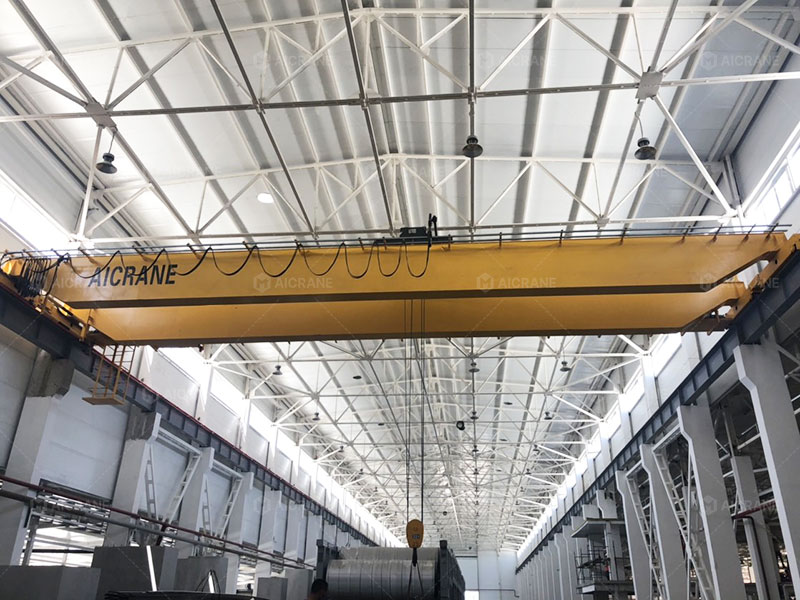
In the realm of heavy industry, a 30-ton double girder overhead crane serves as the undisputed workhorse of the modern manufacturing facility. Whether operating in steel plants, precast concrete yards, paper mills, or wind turbine assembly bays, these heavy-duty industrial bridge crane systems move massive, critical loads day in and day out. However, many industrial facility managers overlook a vital component that dictates the overall efficiency, speed, and safety of the entire system: the specialized below-the-hook lifting device.
While the standard hook provided with a 30 ton overhead crane is incredibly robust, it is often inadequate for lifting loads with complex geometries, off-center gravities, delicate surfaces, or extreme dimensional spans. To handle these unique lifting challenges safely and efficiently, custom hook attachments and specialized below-the-hook engineering solutions are not just optional accessories—they are critical operational necessities.
1. Why Standard Hooks Fall Short for 30-Ton Industrial Crane Applications
To the uninitiated, rigging heavy industrial loads seems simple: wrap a wire rope sling around a load, attach it to the overhead crane hook, and hoist it. However, in heavy lifting operations exceeding 30 tons, this primitive approach creates significant safety hazards, efficiency bottlenecks, and product risks:
- Unstable Center of Gravity: Many industrial loads—such as massive wind turbine hubs, asymmetrical engine blocks, or custom fabricated machinery modules—do not have a centralized center of gravity. Lifting them with standard single hooks and traditional slings often leads to dangerous load tilting, sliding, or swinging during transit.
- Surface and Structural Damage: Direct contact with heavy steel wire ropes or high-strength alloy chains can easily scratch, dent, or warp finished surfaces. This is catastrophic for highly polished steel coils, pre-painted wind turbine tower sections, or precision-machined industrial shafts.
- Operational Inefficiencies: Ground rigging crews must spend excessive time calculating correct rigging angles, finding suitable attachment points, and manually balancing the load before every single lift. This slow process severely chokes production line throughput.
- Headroom and Vertical Space Constraints: Standard rigging hardware and multi-leg slings require substantial vertical clearance. In low-headroom facilities, the vertical drop of the slings can prevent the 30-ton double girder overhead crane from lifting the load high enough to safely clear surrounding machinery or building columns.
2. Primary Types of Custom Below-the-Hook Lifting Devices for 30-Ton Cranes
To overcome these structural and logistical challenges, crane engineers design specialized, heavy-duty below-the-hook attachments. Below are the most prominent custom solutions utilized with 30-ton industrial overhead cranes today:
A. Custom C-Hooks for Steel Coils and Industrial Roll Handling
In steel mills, automotive stamping plants, and metal service centers, lifting 30-ton steel coils is a standard daily requirement that demands speed and extreme precision.
- The Solution: A C-Hook is engineered with an offset counterweight system. This counterweight keeps the lower lifting prong perfectly level whether the hook is empty or carrying a full load. This balance allows the crane operator to smoothly insert the lifting prong directly into the inner diameter of the coil without ground crew intervention.
- Customization: C-hooks are custom-built to match specific coil widths, inner diameters, and outer diameter ranges. To prevent damage to delicate sheet metal, the lifting prongs are frequently lined with protective polyurethane or other non-marring padding.
B. Lifting Beams and Spreader Beams for Wide, Heavy, or Flexible Loads
Lifting long, flexible items like 40-foot structural steel plates, long industrial pipes, or wind turbine blades with a single-point crane hook is highly dangerous, as the ends will sag and potentially bend, warp, or slip from the rigging.
- The Solution:
- Spreader Beams: Designed to convert bending stress into compressive stress. They require two-point top rigging and are ideal for handling extremely wide, heavy loads while keeping the overall lifting assembly lightweight.
- Lifting Beams: Engineered to handle high bending moments, making them the perfect solution for facilities with low headroom where vertical space is at a premium. They provide multiple bottom attachment points to distribute the weight evenly.
- Customization: These beams can be equipped with telescoping ends to handle loads of varying lengths, or integrated with motorized rotators to spin the load 360 degrees in mid-air.
C. Motorized Sheet Lifters and Heavy-Duty Plate Clamps
Handling stacked steel sheets or thick, heavy plates manually is incredibly time-consuming and presents high pinching, crushing, and dropping hazards to the factory floor staff.
- The Solution: A 30-ton motorized sheet lifter utilizes a synchronized mechanical arm system to firmly grip the sides of a stack of plates. A built-in mechanical self-locking mechanism guarantees that the clamping force increases proportionally with the actual weight of the load, ensuring it cannot slip.
- Customization: Custom motorized leg extensions, custom jaw profiles, and integrated electronic weight sensors can be added to detect secure clamping before the heavy-duty electric hoist is allowed to lift the load.
D. Heavy-Duty Electromagnetic and Vacuum Lifters
For flat steel plates, large glass panels, or composite materials where mechanical clamping is impractical or could damage the material’s physical integrity, magnetic or vacuum below-the-hook lifting devices are required.
- The Solution: Multi-pod electromagnetic lifting beams rated for 30 tons can pick up massive plates instantly without the need for manual rigging or wooden spacers.
- Customization: Crucially, custom industrial magnetic lifters must be designed with an integrated Battery Backup System capable of maintaining a full magnetic hold for a minimum of 20 minutes in the event of a primary power failure, preventing a catastrophic drop of the 30-ton load.
3. Engineering Rigor and Overhead Crane Safety Standards
Because these custom below-the-hook lifting devices are directly responsible for suspending 30 tons of material over workers and expensive machinery, they cannot be simple, shop-welded fabrications. They must adhere to strict international engineering and heavy duty overhead crane safety regulations:
- ASME Safety Standards for Below-the-Hook Lifting Devices: In North America and global markets, lifting attachments must be designed and built in accordance with the ASME B30.20 standard (governing marking, inspection, testing, maintenance, and operation) and the ASME Design of Below-the-Hook Lifting Devices standard (specifically the BTH-1 design criteria). These standards categorize lifters based on design categories (Category A for predictable, mild environments; Category B for high-use, severe environments) and mandate minimum design safety factors of 3:1 or 5:1.
- Finite Element Analysis (FEA): Prior to manufacturing, engineering teams utilize advanced Finite Element Analysis software to simulate the exact stress distributions exerted on the attachment under a full 30-ton load. This identifies stress concentration points and ensures structural integrity before steel is cut.
- Rigorous Physical Proof Testing: Every single custom lifter must undergo physical proof testing to 125% of its rated capacity (which equates to a 37.5-ton test for a 30-ton lifter) before being put into active service. A certified test report must accompany the unit.
4. Return on Investment: Why Custom Below-the-Hook Equipment is Cost-Effective
While custom below-the-hook lifters require a higher upfront capital investment than standard polyester slings and shackle rigging, their long-term operational return on investment is highly compelling:
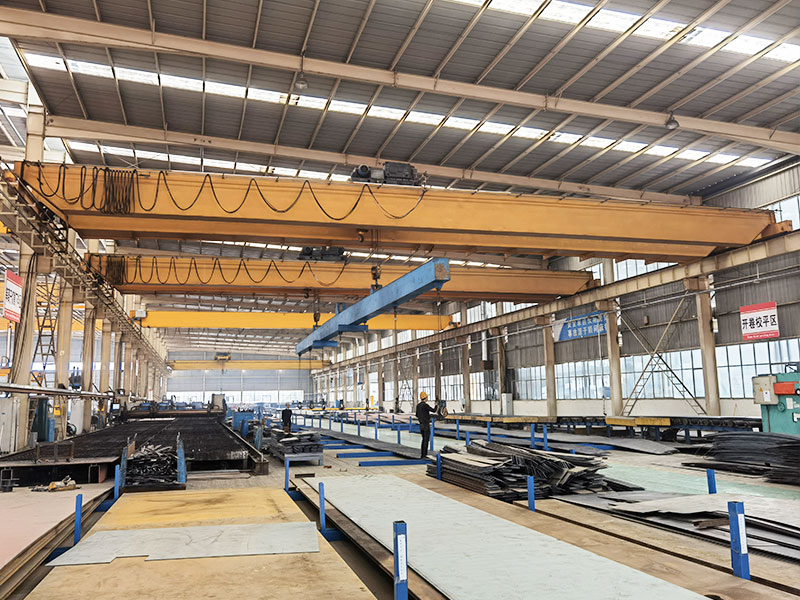
- Drastic Labor and Rigging Time Reduction: Tasks that previously required a three-person ground crew and 15 minutes of manual rigging can often be performed by a single crane operator in under 30 seconds using a motorized, custom below-the-hook attachment.
- Zero-Damage Operations: By eliminating abrasive contact between basic rigging materials and the product, companies eliminate the costly scrap, repair, and rework associated with surface scratches or structural bends.
- Enhanced Workplace Safety and Risk Management: Keeping ground crew members away from the immediate lifting zone drastically reduces the probability of catastrophic workplace injuries, lowering insurance premiums and avoiding costly regulatory downtime.
5. Conclusion
A 30-ton double girder overhead crane provides the raw, muscular power needed to move heavy industrial materials, but a custom-engineered below-the-hook attachment provides the precision, dexterity, and safety to do it effectively. By investing in specialized hook attachments tailored specifically to your applications, you transform your crane from a simple hoisting machine into an optimized, highly productive manufacturing asset.