When selecting or operating a 40 ton gantry crane, one of the most common questions from buyers and operators is whether the rated lifting capacity includes the weight of the hook, spreader, slings, or other rigging equipment. Misunderstanding this point can lead to overloading risks, reduced crane lifespan, or even serious safety incidents.
In practice, the rated capacity of a gantry crane refers to the maximum allowable load that the crane can safely lift under specified operating conditions. However, determining whether the hook block and rigging are included in this value requires a deeper understanding of crane design standards, load definitions, and operational practices.
This article explains how 40 ton gantry crane capacity is defined, how rigging weight affects lifting limits, and how operators should calculate safe lifting loads.

Understanding What “40 Ton Capacity” Means
A 40 ton gantry crane is designed to lift a maximum load of 40 metric tons (40,000 kg) under normal working conditions. This rating is determined by the manufacturer during the design process and verified through structural analysis, mechanical calculations, and load testing.
The rated capacity is usually marked on the crane nameplate and is determined based on several critical factors, including:
- Structural strength of the crane girders and legs
- Hoist motor power and gearbox capacity
- Wire rope strength and drum design
- Trolley structure and wheel load limits
- Safety factors defined by international crane standards
The key point is that the rated capacity refers to the maximum load applied to the hook during lifting. However, the interpretation of this load can vary slightly depending on crane design and standards.
Does the Rated Capacity Include the Hook Weight?
In most gantry crane designs, the hook block itself is not included in the rated lifting capacity.
The hook assembly – including the hook, pulley block, bearings, sheaves, and housing – is considered part of the crane’s lifting mechanism. Because it is permanently attached to the hoisting system, gantry crane manufacturers design the crane with the hook block weight already taken into account.
This means that when a crane is rated at 40 tons, it is generally capable of lifting 40 tons of external load, not counting the hook block weight.
For example:
- Rated crane capacity: 40 tons
- Hook block weight: 2 tons
- Maximum payload lifted: 40 tons
The hook block weight is already included in the internal design calculations of the crane’s hoisting mechanism, so operators typically do not subtract the hook block weight from the rated capacity.
However, this does not automatically apply to all rigging components, which leads to an important distinction.
Are Slings and Rigging Included in the Capacity?
Unlike the hook block, rigging equipment is usually included in the total lifted load.
Rigging components may include:
- Wire rope slings
- Chain slings
- Synthetic lifting slings
- Shackles
- Lifting beams
- Spreaders
- Clamps or lifting fixtures
Because these accessories are not permanently attached to the crane, they are considered part of the lifted load.
Therefore, the total weight lifted by the crane must include both the load and the rigging.
For instance:
Example lifting scenario:
- Rated crane capacity: 40 tons
- Steel structure weight: 38 tons
- Lifting beam weight: 1.5 tons
- Shackles and slings: 0.5 tons
Total lifted load = 40 tons
In this case, the crane is operating exactly at its rated capacity. If the rigging weight were ignored, the crane would actually be overloaded.
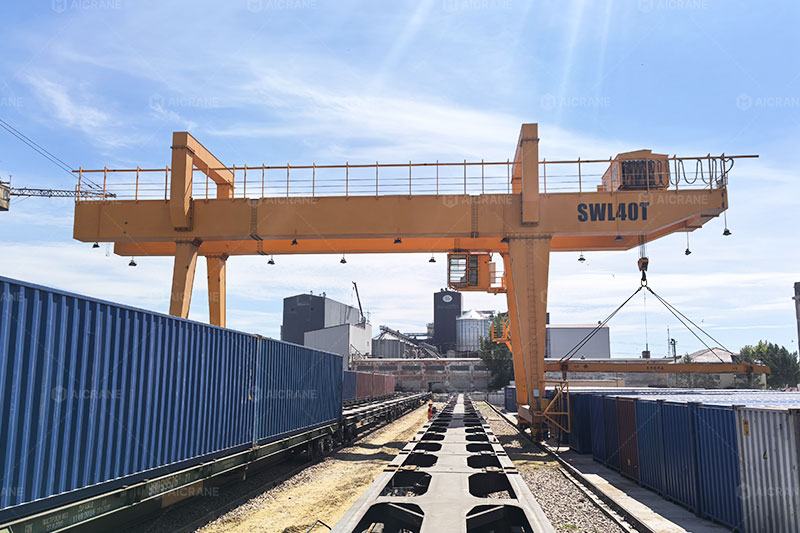
Why Rigging Weight Matters in Heavy Lifting
In light lifting operations, rigging weight may be relatively small and sometimes overlooked. However, when dealing with heavy industrial loads, rigging weight can become significant.
For example:
- Large lifting beams may weigh 2–10 tons
- Heavy-duty spreaders may exceed 5 tons
- Specialized lifting fixtures used in steel or precast industries can weigh several tons
When using a 40 ton double girder gantry crane, failing to consider rigging weight can quickly exceed the crane’s safe limit.
This is especially important in industries such as:
- Steel fabrication plants
- Shipyards
- Precast concrete yards
- Wind turbine component handling
- Heavy machinery assembly workshops
In these environments, rigging systems are often large and heavy, and accurate load calculation is essential.
How Operators Should Calculate the Actual Lifting Load
To ensure safe operation, crane operators should always calculate the total lifted load, which includes all external components.
The basic formula is:
Total lifting load = Load weight + Rigging weight
Where rigging weight may include:
- Slings
- Shackles
- Spreader beams
- Lifting clamps
- Magnetic lifters
- Any other lifting accessories
For example:
- Equipment being lifted: 36 tons
- Lifting beam: 2 tons
- Slings and shackles: 1 ton
Total lifted load:
36 + 2 + 1 = 39 tons
Since the total is below 40 tons, the lifting operation remains within the gantry crane rated capacity.
Load Testing and Capacity Verification
Before a gantry crane enters service, it typically undergoes load testing to verify its capacity.
The load test often involves:
- Static load test: usually 125% of rated capacity
- Dynamic load test: around 110% of rated capacity
For a 40 ton gantry crane, this may involve:
- Static test load: 50 tons
- Dynamic test load: 44 tons
These tests confirm that the crane structure, hoist system, and safety devices can safely handle loads near the rated capacity.
However, these tests are conducted using test weights or calibrated loads, not including temporary rigging accessories used during actual operations.
Safety Devices That Prevent Overloading
Modern gantry cranes are often equipped with overload protection systems to prevent lifting loads that exceed the rated capacity.
Common safety devices include:
Load Limiters
Electronic load limiters measure the force applied to the hoist system and prevent lifting if the load exceeds the safe limit.
Load Indicators
These systems display the actual load weight to the operator in real time.
Limit Switches
Hoisting limit switches prevent the hook block from over-traveling and damaging the crane structure.
These safety systems provide an additional layer of protection, but they should never replace proper load calculations.
Best Practices for Safe Lifting with a 40 Ton Gantry Crane
To ensure safe and efficient lifting operations, operators and engineers should follow several key practices.
Always Account for Rigging Weight
Even if the rigging appears small, it must be included in the total load calculation.
Use Certified Rigging Equipment
Rigging components should have clearly marked working load limits (WLL) and be inspected regularly.
Verify Load Weight Before Lifting
Whenever possible, obtain the exact weight of the load from engineering drawings or manufacturer specifications.
Avoid Operating at Maximum Capacity
Operating continuously at 100% capacity increases wear on mechanical components. Many operations aim to stay within 80–90% of rated capacity for improved safety and equipment longevity.
Provide Operator Training
Proper training ensures that crane operators understand:
- Load calculations
- Rigging safety
- Crane capacity limitations
- Emergency procedures
Final Thoughts
The rated capacity of a 40 ton gantry crane generally refers to the maximum external load that can be safely lifted by the hook, excluding the weight of the hook block itself. The hook block is considered part of the crane’s hoisting system and is already accounted for in the crane’s design.
However, rigging equipment such as slings, shackles, lifting beams, and spreaders must be included in the total lifting load. Ignoring these weights can easily result in exceeding the crane’s rated capacity, creating serious safety risks.
For safe crane operation, it is essential to calculate the total lifted load carefully, follow manufacturer guidelines, and ensure that operators are properly trained. By understanding how lifting capacity is defined and applied, industries can maximize the efficiency of a 40 ton gantry crane while maintaining the highest safety standards.