In the heavy industrial sector, purchasing a gantry crane is a transformative investment that dictates operational efficiency for a decade or more. As we move through 2026, the criteria for selecting the right equipment have evolved. Today’s buyers must look beyond basic lifting capacity to account for smart maintenance, energy recovery, and site-specific mobility.
Whether you are equipping a precast concrete yard, a steel distribution center, or a high-volume logistics hub, this guide outlines the critical factors to evaluate before you buy gantry crane.
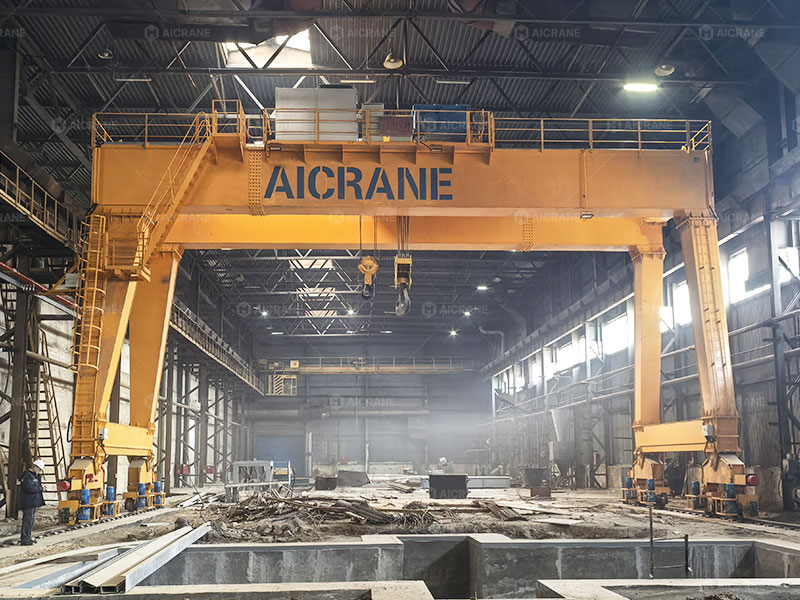
1. Defining Core Specifications for Long-Term Utility
While every buyer starts with capacity and span, 2026 industrial standards require a deeper look at how these metrics affect the machine’s “useful life.”
Beyond the Safe Working Load (SWL)
Matching the crane to your heaviest load is only the first step. The Duty Cycle (ISO/FEM classification) is what determines how many hours a day the crane can operate without structural fatigue.
-
The Overuse Risk: Selecting a light-duty (A3) crane for a severe-duty (A7) application – such as a continuous steel mill – will lead to motor failure and structural cracks within years.
-
Future-Proofing: We recommend a 10-15% capacity buffer to handle potential business growth and heavier future product lines.
Precision in Dimensions
In modern industrial yards, space is at a premium. Ensure your Clearance Span accounts for not just the load, but the safe passage of trucks and personnel. Additionally, your Hook Height must include the vertical space required for specialized rigging gear and spreaders.
2. Mobility: Rail-Mounted vs. Rubber Tyred
The choice between a Rail-Mounted Gantry (RMG) and a Rubber Tyred Gantry (RTG) is the most significant decision impacting your facility’s layout and future scalability.
-
Rail-Mounted (RMG): Best for fixed, high-frequency production lines. They offer extreme precision and stability but lock you into a specific operational path.
-
Rubber Tyred (RTG): The preferred choice for modern multi-use yards. Their ability to perform 90-degree crab steering and move between different bays allows you to reconfigure your yard layout as your projects change. For companies that value flexibility, the RTG is the clear winner.
3. The 2026 Tech Suite: Intelligence and Safety
A crane purchased today without digital integration is “legacy” equipment from day one. Modern systems now utilize the Internet of Things (IoT) to protect your investment.
Predictive Maintenance (Digital Twins)
Leading manufacturers now offer virtual replicas of your crane. Onboard sensors track motor temperatures and gear vibrations in real-time. Instead of waiting for a breakdown, the system alerts you when a part is reaching its limit, allowing for planned maintenance that doesn’t disrupt your production schedule.
Intelligent Anti-Sway Systems
Wind is the primary enemy of outdoor productivity. 2026 models utilize laser scanners to detect load sway and automatically adjust trolley speed to stabilize the cargo. This allows for faster cycle times and significantly safer operations in gusty conditions.
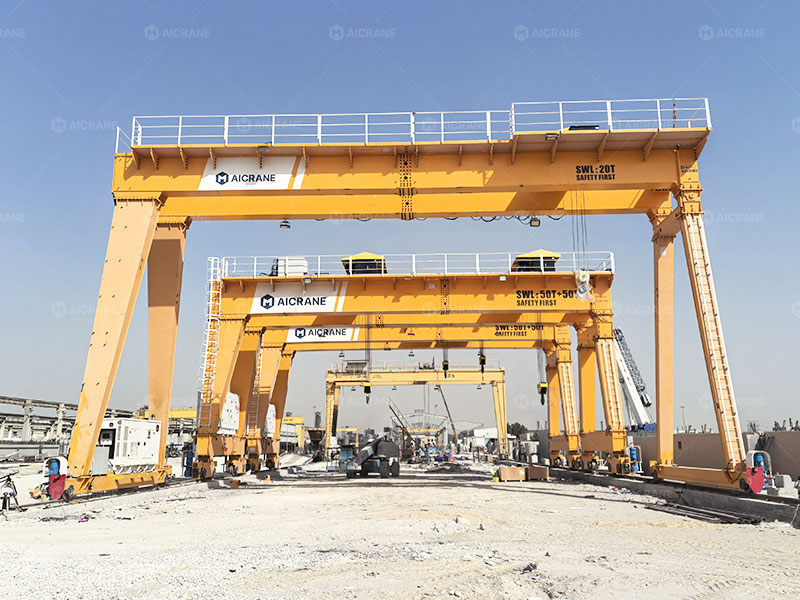
4. Sustainability and Energy Efficiency
With tightening environmental regulations and rising energy costs, “Green Lifting” is now a financial necessity.
-
Regenerative Power: Modern cranes act as generators when lowering heavy loads. This energy can be captured and fed back into your facility’s grid, potentially reducing energy costs by up to 30%.
-
Electrification (eRTG): For outdoor mobile gantry cranes, consider hybrid or fully electric systems (eRTG). These use busbars or cable reels for primary operations, keeping a small diesel engine only for emergency moves or bay-to-bay transfers.
5. Environmental Resilience and Site Specifics
A crane’s design must reflect its environment. A unit working in a humid coastal shipyard requires vastly different protection than one in a dry, inland workshop.
-
Corrosion Protection: For outdoor or coastal use, specify marine-grade C5-M coatings or hot-dip galvanization to prevent rust.
-
Temperature Control: In extreme climates (e.g., the Middle East or Russia), ensure motors are equipped with forced cooling or space heaters to maintain operational integrity.
6. Total Cost of Ownership (TCO)
The “Sticker Price” is only one part of the equation. A cheap crane with proprietary parts can become a liability if service is slow or parts are hard to find.
-
Component Universality: Ensure critical components like motors and PLCs are from globally recognized brands (e.g., Siemens, Schneider, or ABB). This ensures you can find spare parts and local technicians anywhere in the world.
-
Manufacturer Track Record: Don’t just take the salesperson’s word. Ask for case studies and site photos of equipment operating in your specific industry. If you are in the precast concrete business, look for a supplier who has successfully delivered 100-ton units to similar plants.
Conclusion: Making the Final Decision
A gantry crane for sale is the heartbeat of your industrial operation. In 2026, the most successful buyers prioritize versatility and data over the lowest initial bid.
Before signing, ensure your supplier provides:
-
Custom Engineering: A design tailored to your specific yard layout.
-
Remote Telediagnostics: The ability for engineers to troubleshoot software issues remotely via 5G.
-
Verifiable Success: A documented history of delivering reliable equipment to your region.
By focusing on these essential factors, you ensure that your 2026 purchase remains a productive, safe, and efficient asset for the next 20 years.