Rail-side operations present a unique set of lifting, handling, and logistical challenges. Whether the application involves loading steel coils onto flat wagons, unloading precast concrete beams, handling containers, or transferring bulk materials along railway lines, the crane system must work in parallel with the rail infrastructure—not against it. In this context, cantilever gantry cranes have become one of the most effective and widely adopted solutions.
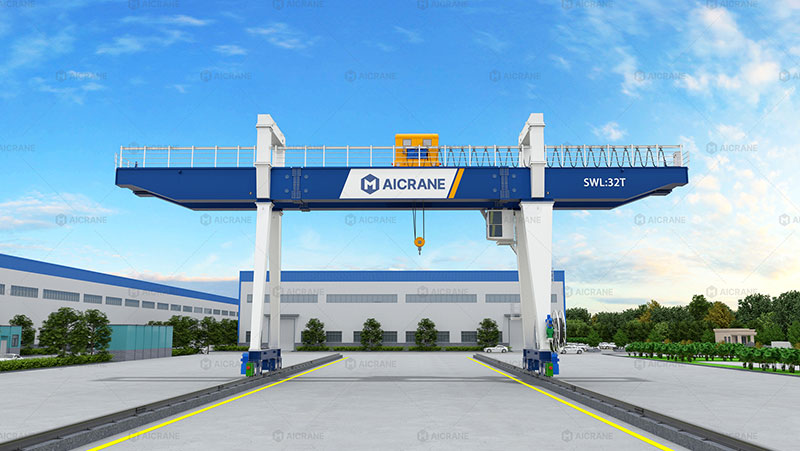
A cantilever gantry crane is distinguished by its extended overhang (cantilever) beyond the supporting legs, allowing it to service rail wagons, loading platforms, or storage areas located outside the main crane span. This article explores, in depth, how cantilever gantry cranes are designed specifically for rail-side operations, covering structural configuration, load paths, stability considerations, rail interfaces, mechanical systems, safety design, and customization for demanding industrial environments.
1. Why Cantilever Design Is Essential for Rail-Side Operations
In traditional gantry crane layouts, the working area is largely confined within the span between the two legs. However, rail-side logistics rarely fit neatly into this geometry. Railway tracks are often positioned:
-
Along the edge of a yard
-
Adjacent to warehouses or stockpiles
-
Parallel to production lines or loading docks
A cantilever design solves this mismatch by allowing the crane’s girder to extend beyond one or both legs, enabling:
-
Direct access to rail wagons without placing legs between tracks
-
Simultaneous coverage of rail lines and storage areas
-
Reduced need for additional transfer equipment (forklifts, reach stackers, etc.)
For bulk and heavy industries—such as steel, precast concrete, mining, and logistics hubs—this configuration significantly improves handling efficiency and site utilization.
2. Structural Configuration of Cantilever Gantry Cranes
2.1 Single vs Double Cantilever Layouts
Cantilever gantry cranes used in rail-side operations typically adopt one of two configurations:
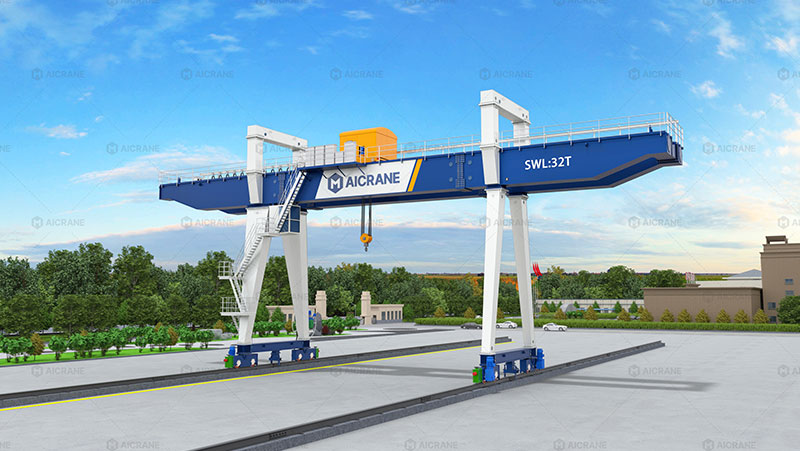
Single cantilever gantry crane: One side of the main girder extends beyond the supporting leg, usually over the railway track.
Double cantilever gantry crane: Both sides extend beyond the legs, providing maximum operational flexibility when tracks and storage zones exist on both sides.
The selection depends on yard layout, track position, and future expansion plans.
2.2 Box Girder and Truss Girder Choices
Structural design must balance stiffness, weight, and fabrication complexity:
-
Box girders are preferred for rail-side heavy duty gantry cranes due to:
-
High torsional rigidity
-
Better resistance to cantilever-induced bending
-
Improved fatigue performance
-
-
Truss girders may be used for lighter loads or long cantilevers where weight reduction is critical, though they require more complex maintenance.
3. Load Path and Cantilever Stress Management
Cantilever sections introduce asymmetric load paths, which are among the most critical design challenges in railway gantry crane engineering.
3.1 Bending Moment Concentration
When lifting loads over the cantilever:
-
Maximum bending moments occur near the leg-to-girder connection
-
Stress levels are significantly higher than in mid-span lifting
Design strategies include:
-
Reinforced girder sections near the leg
-
Variable cross-section girders (thicker plates in high-stress zones)
-
Finite Element Analysis (FEA) during design validation
3.2 Load Distribution Through Legs and End Carriages
To prevent overloading:
-
Vertical loads are redistributed through optimized leg geometry
-
Horizontal forces from trolley travel and wind loads are transferred into rails or wheels uniformly
-
End carriages are designed with sufficient wheelbase to reduce rail stress
4. Rail Interface and Track Arrangement Design
Rail-side cantilever gantry cranes must coexist with operational railway systems, making interface design critical.
4.1 Clearance and Envelope Design
Key considerations include:
-
Safe distance from rail wagons and locomotives
-
Compliance with railway clearance standards
-
Allowance for wagon sway and dynamic movement
The cantilever length is calculated to ensure full coverage without violating safety envelopes.
4.2 Rail Foundation and Alignment
For rail mounted gantry cranes:
-
Crane rails and railway tracks must be independently aligned
-
Differential settlement between crane rails and railway foundations must be minimized
-
Expansion joints are incorporated for temperature variation
In rubber-tyred cantilever gantry cranes, ground bearing pressure and pavement strength become equally critical.
5. Hoisting and Trolley Design for Rail-Side Lifting
5.1 Hoisting Mechanism Selection
Rail-side applications often involve:
-
Heavy, dense loads (steel coils, billets, precast beams)
-
Irregular or eccentric lifting points
Therefore, hoisting systems typically feature:
-
Heavy-duty wire rope hoists or winch trolleys
-
High safety factors for ropes, drums, and brakes
-
Load monitoring and overload protection
5.2 Trolley Stability on Cantilever Sections
When the trolley moves over the cantilever:
-
Additional guide rollers or reinforced rail beams may be required
-
Anti-tilt trolley frames are commonly used
-
Travel speeds are carefully limited to reduce dynamic impact
6. Stability, Anti-Tipping, and Wind Resistance
Cantilever gantry cranes inherently face higher tipping moments, especially in outdoor rail yards.
6.1 Anti-Tipping Design Measures
Key measures include:
-
Increased leg spacing and wheelbase
-
Heavier end carriages on non-cantilever sides
-
Tie-down or storm anchor systems for high-wind regions
6.2 Wind Load and Dynamic Effects
Rail-side cranes are often installed in open areas with strong crosswinds. Design must account for:
-
Wind load on both structure and lifted load
-
Lateral forces during trolley travel on the cantilever
-
Emergency parking positions with rail clamps or wind locks
7. Electrical, Control, and Safety Systems
Rail-side environments demand high safety and operational reliability.
7.1 Control Modes
Common control options include:
-
Cabin control for complex, heavy-duty operations
-
Remote control for improved visibility along rail wagons
-
Ground control for maintenance and auxiliary tasks
7.2 Safety Integration
Essential safety features include:
-
Limit switches for trolley and hoist travel
-
Anti-collision systems when multiple cranes operate along the same rail line
-
Audible and visual alarms during rail-side lifting
8. Customization for Rail-Side Industrial Applications
Cantilever gantry cranes are rarely “off-the-shelf” products in rail logistics. Customization often includes:
-
Specialized lifting devices (C-hooks, coil grabs, spreader beams)
-
Dual-hoist systems for long or flexible loads
-
Corrosion-resistant coatings for outdoor environments
-
Low-temperature adaptations for cold regions
Such customization ensures compatibility with both railway operations and material handling requirements.
9. Operational and Economic Advantages
Well-designed cantilever gantry cranes provide significant long-term benefits:
-
Reduced material handling steps
-
Faster wagon loading and unloading cycles
-
Improved safety by minimizing manual intervention
-
Higher return on investment through efficient yard utilization
By directly servicing rail wagons from storage or production areas, these cranes become a central logistics asset rather than just lifting equipment.
Conclusion
Cantilever gantry crane design for rail-side operations is a sophisticated engineering discipline that integrates structural mechanics, load dynamics, rail interface planning, and safety engineering. The cantilever structure enables seamless interaction between crane systems and railway infrastructure, making it indispensable for modern rail logistics, heavy industry yards, and bulk material handling terminals.
When properly designed—taking into account cantilever stresses, stability, wind loads, hoisting behavior, and rail clearance—a cantilever gantry crane delivers unmatched efficiency, flexibility, and reliability. For businesses relying on rail transport as a core logistics channel, investing in a purpose-engineered cantilever gantry crane is not just a technical decision, but a strategic one.